
 English
 Spanish
 Russian
 Arabic
 Italian


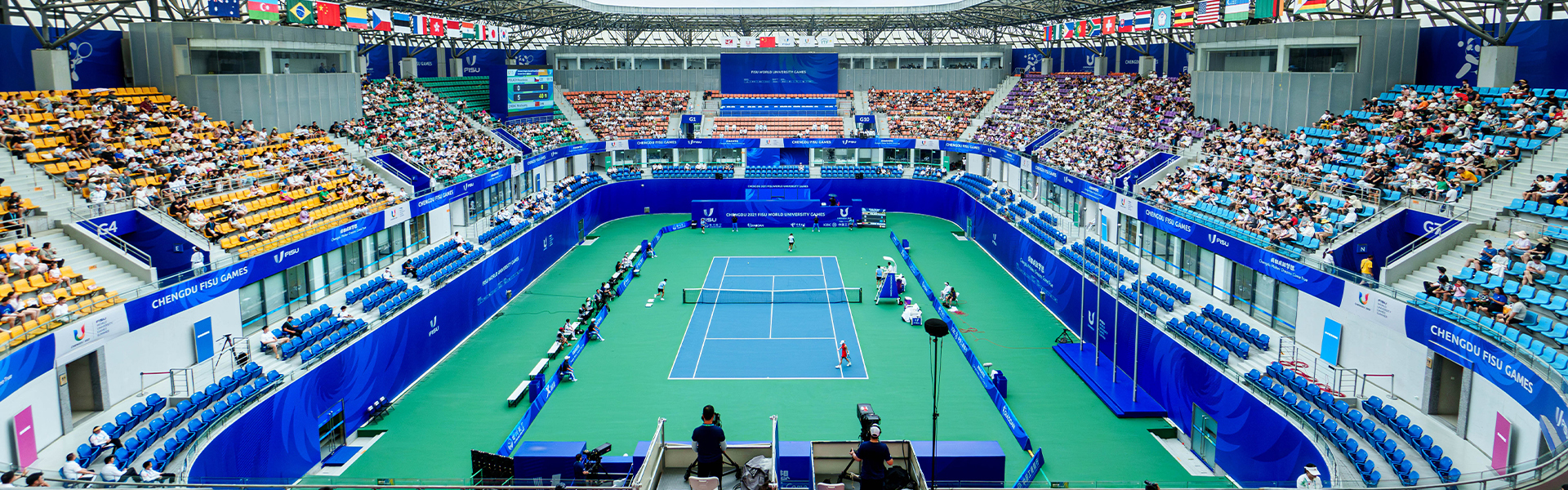
From Promotion to Preparation: Why Professional Football Stadiums Need Lighting Upgrades
A football club's promotion to a higher league is more than a sporting achievement. It also brings new expectations for its home stadium.
As clubs move into more competitive professional leagues, stadium facilities must keep pace with the changing demands of modern football. Playing surfaces, lighting systems, spectator facilities, safety infrastructure, and television broadcasting capabilities all become increasingly important.
The recent promotion of Nantong Zhiyun to the Chinese Super League provides another example of how football development and stadium infrastructure go hand in hand.
For stadium owners and operators, this raises an important question: Is the existing stadium infrastructure ready for the next level of professional football?
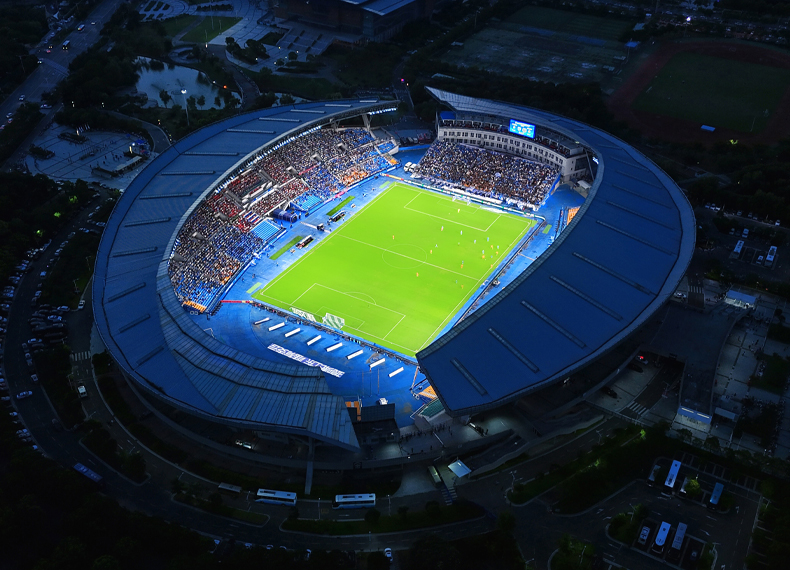
1. Higher Competition Levels Bring Higher Stadium Requirements
Professional football competitions place greater demands on stadium facilities than ordinary community or amateur matches.
As competition levels increase, venues may need to accommodate more demanding requirements for:
-
Match-day lighting performance and visual comfort.
-
Horizontal and vertical illuminance for players and television cameras.
-
Lighting uniformity across the entire playing field.
-
Glare control and color rendering.
-
High-definition television broadcasting.
-
Reliable operation throughout the competition season.
Meeting these requirements is not simply a matter of installing brighter floodlights. A professional stadium lighting system must be designed around the venue's structure, installation conditions, competition requirements, and broadcasting needs.
2. Stadium Lighting Is a Critical Part of Venue Upgrades
Among the various stadium infrastructure improvements, lighting deserves particular attention.
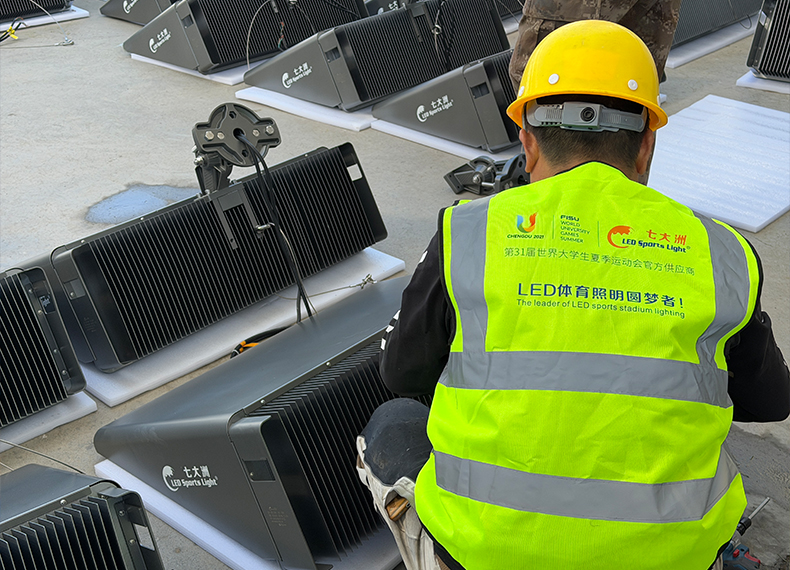
Older football stadiums may still rely on metal halide floodlights that have experienced significant lumen depreciation, slow startup times, and high energy consumption.
Upgrading to professional LED sports lighting can help address these challenges while improving lighting control and operational flexibility.
However, every stadium presents different technical conditions.
Existing mounting structures, floodlight positions, installation heights, aiming angles, and electrical infrastructure can all affect the renovation design.
For this reason, professional lighting upgrades should begin with a detailed assessment of the existing venue, followed by photometric simulation and an appropriate fixture configuration.
3. What Does a Professional Football Stadium Lighting System Need?
A modern football stadium lighting solution should address several key performance factors.
Horizontal and Vertical Illuminance
Adequate horizontal illuminance supports visibility across the playing surface, while vertical illuminance is important for television cameras to capture players and match action clearly.
Lighting Uniformity
Consistent illumination helps avoid distracting bright and dark areas across the pitch, supporting both player performance and broadcast quality.
Glare Control
Proper optical design, fixture aiming, and glare-control accessories help reduce visual discomfort for players, spectators, and officials.
Color Rendering and Color Temperature
Appropriate color rendering and color temperature contribute to natural-looking images and a comfortable visual environment.
Reliability and Energy Efficiency
Professional football venues need lighting systems capable of supporting frequent matches, training sessions, and long-term stadium operations.
These factors should be evaluated together rather than treating illuminance as the only measure of lighting quality.
4. Real-World Football Stadium Lighting Experience
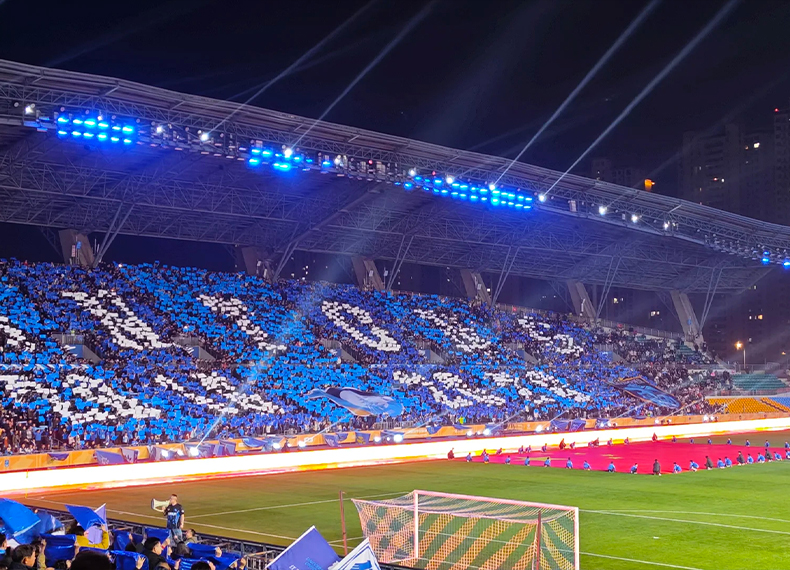
SCL Sports Lighting has delivered professional football stadium lighting projects under different competition and installation conditions.
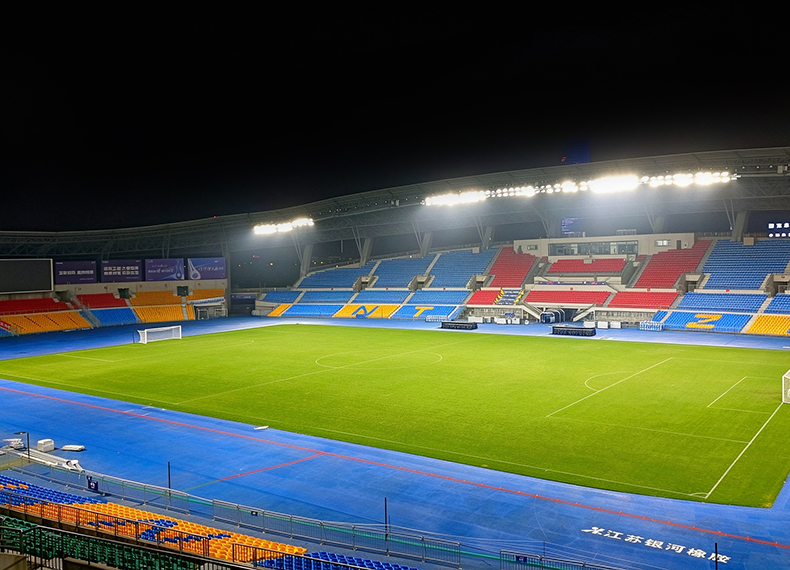
One example is Rugao Sports Center, the home venue of Nantong Zhiyun Football Club. SCL Sports Lighting provided the stadium's lighting system. Following the club's promotion to the Chinese Super League, the project also provides a relevant reference for professional football stadium lighting.
Other projects demonstrate SCL's experience in meeting specific competition and broadcasting requirements.
Qinzhou Sports Center – China League One
For the 2026 season, SCL Sports Lighting completed a customized LED lighting upgrade using 110 professional sports lights.
Despite restrictions imposed by the existing stadium catwalk structures, the lighting design achieved:
-
Horizontal illuminance above 1,200 lux.
-
Uniformity U1 greater than 0.5.
-
Uniformity U2 greater than 0.7.
-
Color temperature above 5,000K.
The system achieved Class III professional competition lighting under JGJ153-2016, while vertical illuminance, glare control, and color rendering performance met the HD television broadcasting requirements for China League One matches.
Ji'an National Fitness Sports Center – 2026 Jiangxi Football Super League
This project was designed to meet two different competition classifications:
-
Class IV: National and international TV broadcast competitions.
-
Class II1: Professional football competitions.
It demonstrates the importance of designing stadium lighting systems around the actual requirements of different competition levels.
These projects illustrate how professional lighting design and customized LED sports lighting solutions can support football venues with different operational and technical requirements.
5. Preparing Stadiums for the Future of Professional Football
The development of professional football is closely connected to the quality of its supporting infrastructure.
When a club moves into a higher league, its home stadium must be prepared to accommodate more demanding competition, broadcasting, and operational requirements.
For existing venues, a well-planned lighting upgrade can be an important step toward improving stadium functionality without necessarily requiring a complete reconstruction.
At SCL Sports Lighting, we specialize in professional sports venue lighting solutions, combining lighting design, photometric simulation, customized LED sports lighting equipment, and project-specific technical support.
From professional football stadiums to venues designed for national and international television broadcasting, our goal is to help stadium operators create reliable, efficient, and competition-ready lighting environments.
As football moves forward, stadium infrastructure must move forward with it.

 Service Hotline:
 Email:
 Add: