
 English
 Spanish
 Russian
 Arabic
 Italian


LED Sports Lighting Salt Spray Testing Explained: Why Corrosion Resistance Matters for Outdoor Stadium Lighting
Complete Guide to Salt Spray Testing for LED Sports Lighting: Why Corrosion Resistance Matters
When evaluating professional LED sports lighting, most attention is given to brightness, color rendering, glare control, and energy efficiency. However, corrosion resistance is another essential factor that directly determines long-term reliability.
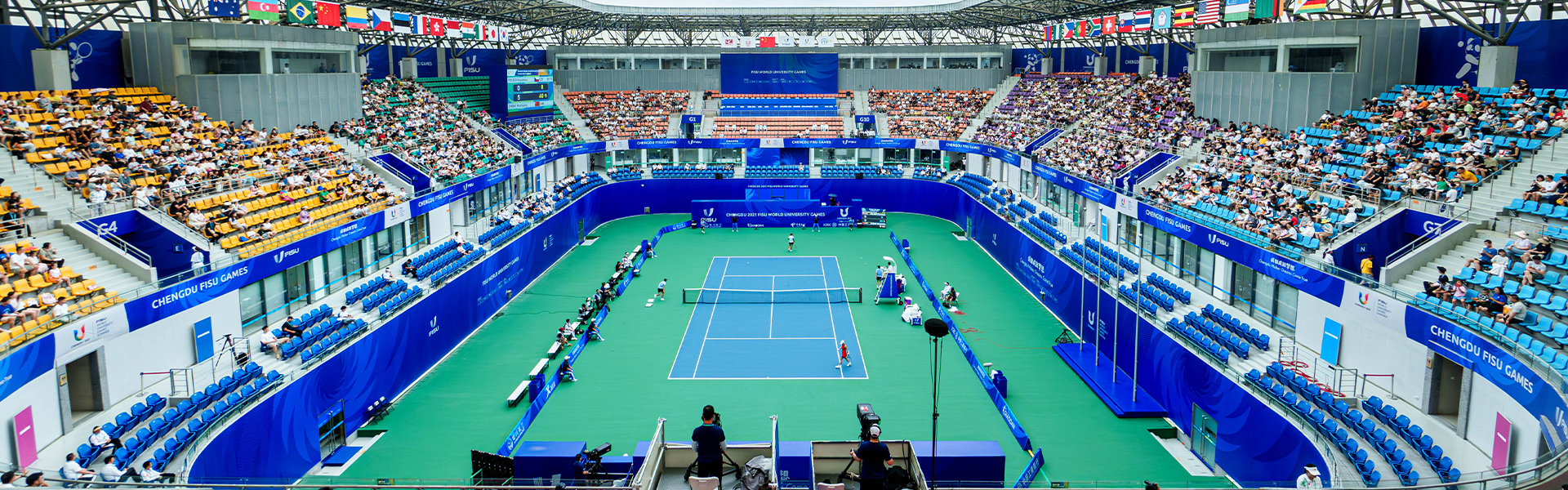
Lighting fixtures installed in coastal stadiums, swimming pools, and humid outdoor environments are continuously exposed to salt-laden air, moisture, and corrosive chemicals. Over time, these conditions can affect structural integrity, thermal performance, and waterproof sealing.
For professional sports lighting, excellent corrosion resistance is not an optional feature—it is a prerequisite for dependable operation over many years.
1.Why Is Corrosion Resistance Essential for Professional Sports Lighting?
Sports lighting fixtures are expected to operate reliably for many years, but different venues present very different corrosion challenges.
For example:
- Coastal stadiums are constantly exposed to salt-laden sea air.
- Swimming pools combine high humidity with chlorine-rich atmospheres.
- Indoor arenas may experience chemical vapors from cleaning agents and repeated temperature changes.
Without proper corrosion protection, fixtures may suffer from:
- Peeling surface coatings
- Rusted fasteners that weaken structural safety
- Corroded heat sinks that reduce cooling efficiency
- Damaged seals that compromise waterproof and dustproof performance
Corrosion resistance is therefore a critical part of the overall reliability of professional LED sports lighting—not simply a cosmetic feature.
2.How Salt Spray Testing Simulates Years of Outdoor Exposure
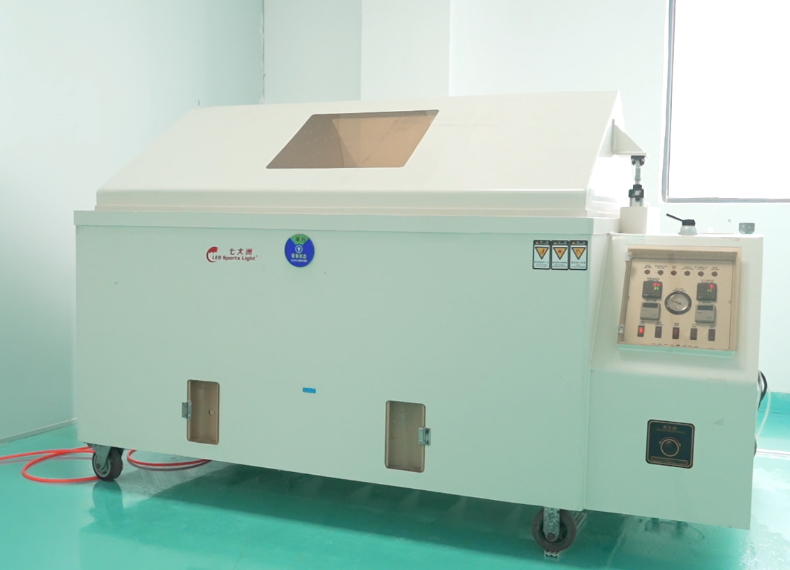
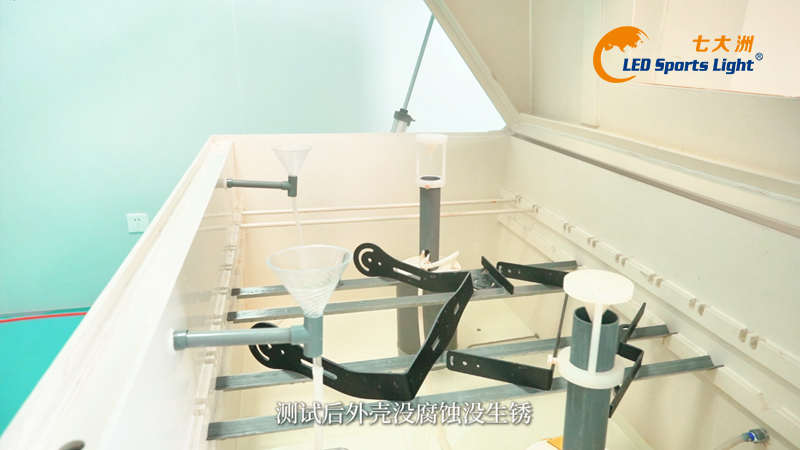
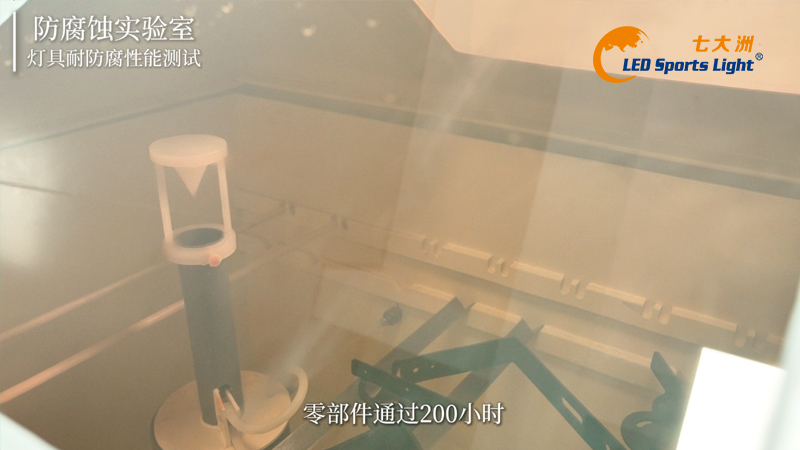
To evaluate long-term durability in corrosive environments, professional laboratories perform accelerated salt spray testing using specialized corrosion chambers.
Although the test lasts only hundreds of hours, it simulates years of exposure to coastal and high-humidity environments.
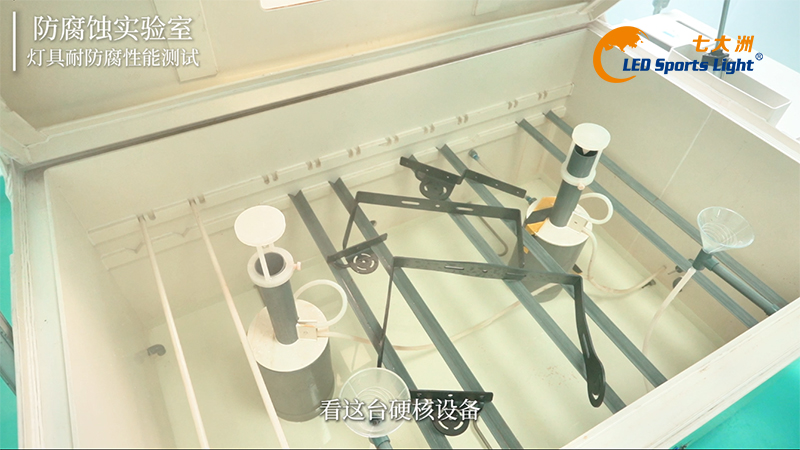
The testing process includes three essential stages:
Standard Salt Solution
A 5% sodium chloride solution with controlled pH is used to reproduce the corrosive conditions commonly found near coastlines and swimming pools.
Precision Atomization
A specialized atomizing system converts the solution into ultra-fine salt particles that continuously settle on the housing, heat sink, joints, and fasteners.
High-Humidity Environment
The chamber maintains approximately 35°C with humidity above 95%, accelerating corrosion and material aging.
For products intended for demanding environments, testing may continue for 500 hours or longer to evaluate long-term corrosion resistance.
3.The Final Verification: Every Component Must Resist Corrosion
Completing the salt spray exposure is only the beginning of the evaluation.
Engineers carefully inspect every critical component, including:
- Surface coatings
- Heat sinks
- Fasteners
- Cable connections
- Internal structural parts
- Driver PCB
- Electrical connectors
To pass the test, fixtures must show:
- No coating blistering
- No coating peeling
- No red rust
- No visible corrosion spots
- Fully functional fasteners
- Complete structural integrity
Any visible corrosion on critical components results in immediate failure. Test results are then verified through calibration, data review, and independent engineering confirmation.
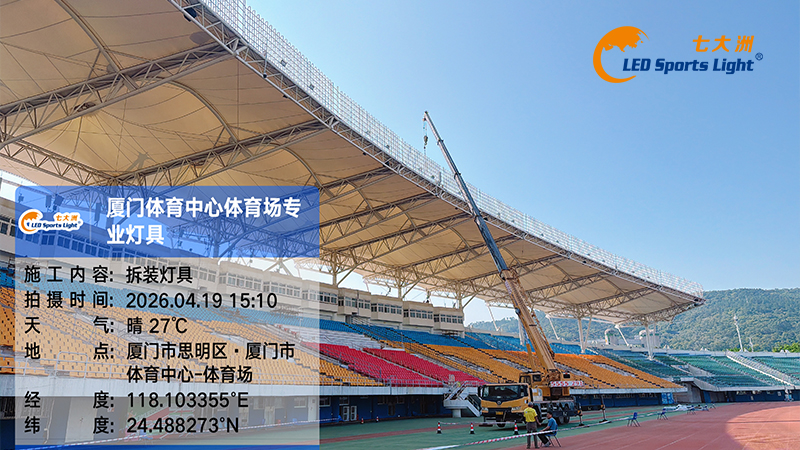
Outstanding corrosion resistance is never achieved by paint alone. It is the result of an integrated engineering process that combines material selection, surface treatment, manufacturing precision, and laboratory validation.
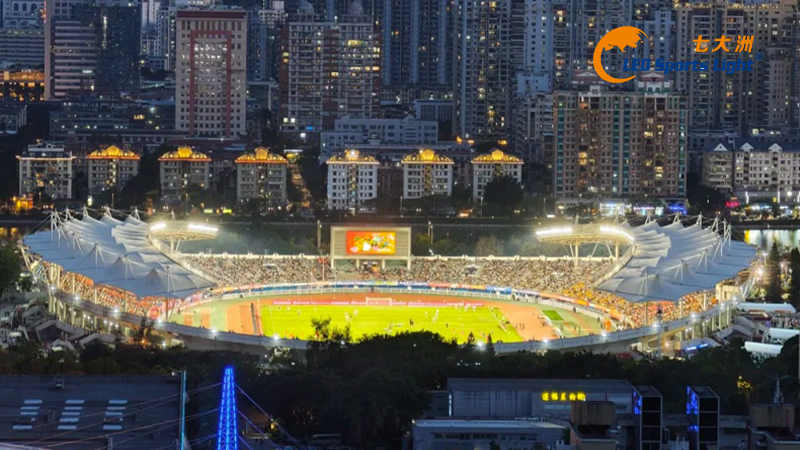
At SCL, engineers optimize every stage of production, including:
- High-quality aluminum housings
- Stainless steel fasteners
- Electrostatic powder coating
- Anodized surface treatment
- Heat sink design
- Surface pre-treatment processes
- Coating adhesion control
Together, these engineering details enable lighting fixtures to withstand years of exposure to salt spray and humid environments while maintaining reliable performance.
Professional LED sports lighting should not only deliver outstanding illumination—it must also remain dependable in the harshest operating conditions.
Frequently Asked Questions (FAQ)
Q1. Why do stadium lights need salt spray testing?
EN: Salt spray testing evaluates how well lighting fixtures resist corrosion caused by salt, humidity, and harsh outdoor environments, helping predict long-term durability.
Q2. Which sports venues require corrosion-resistant lighting?
EN: Coastal stadiums, swimming pools, water sports centers, marinas, and outdoor venues in humid climates all require corrosion-resistant lighting systems.
Q3. Is salt spray testing equivalent to real outdoor service life?
EN: Salt spray testing is an accelerated laboratory method that compares corrosion resistance under standardized conditions. Actual service life also depends on installation location, climate, and maintenance.

 Service Hotline:
 Email:
 Add:
Add: